
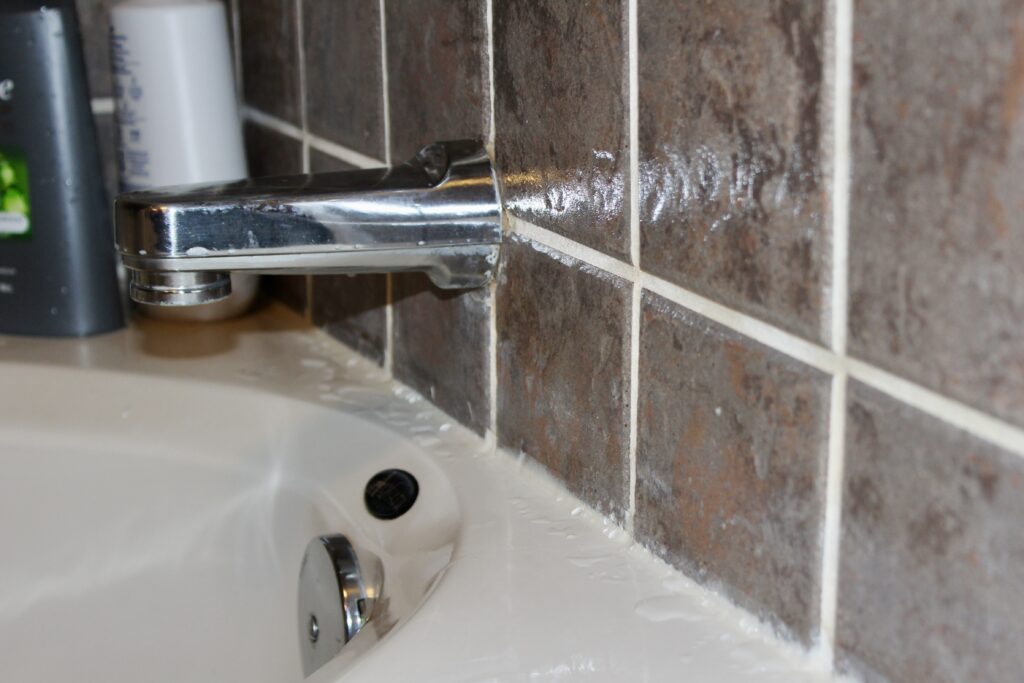
Switching from latex to silicone caulk in my bathroom seemed straightforward until I hit tile gaps that widened and narrowed instead of running straight. After 2 hours of trial and error, I learned that “perfect” caulk lines aren’t always possible — but functional sealing definitely is.
The short version: get every bit of the old caulk out, let the joint dry for at least 24 hours, and use 100% silicone.
Why Bathroom Caulk Fails
Bathroom caulk fails for a few specific reasons, and knowing them before you start saves you from doing the job twice.
The most common mistake: caulking over old caulk. New caulk over old caulk bonds to the old caulk, not to the tile or tub. When the old caulk eventually lets go — and it will — it takes the new caulk with it. The old stuff has to come out completely.
The second most common mistake: wrong product. Latex caulk is easier to apply and clean up, but it breaks down faster in areas that get direct, repeated water contact. The tub surround, shower floor, and anywhere water pools or splashes heavily needs 100% silicone.
Third: applying to a damp or dirty surface. Silicone won’t bond to soap scum, mildew residue, or moisture. The surface needs to be completely clean and completely dry before you apply anything.
If you’ve recaulked the same joint more than once and it keeps failing, that’s a different problem — it’s on the list of warning signs worth knowing, because repeated caulk failure in the same spot usually means movement behind the joint.
Caulk removal is also step one in bigger tub projects. Before refinishing our tub with a Rustoleum kit, every bead had to come out as part of the prep — and recaulking was the final step once the coating cured.
Removing the Old Caulk
This is the part that takes the most time and the part most people rush. Don’t.
Score along both edges of the old caulk with a utility knife or plastic caulk removal tool. Pull the bulk of it out in strips. What doesn’t come off in strips gets scraped out carefully — you’re trying not to scratch the tub or tile surface.
Once the visible caulk is gone, apply a caulk remover product to the joint and let it sit for the time specified on the label. It softens what’s left and makes the final cleanup much easier. Wipe everything out, then clean the entire surface with rubbing alcohol or a bathroom cleaner that doesn’t leave a film.
Then wait. The joint needs to be completely dry before you caulk — at least 24 hours after cleaning, longer if the bathroom doesn’t ventilate well.
Applying the New Caulk
Cut the caulk tube tip at a 45-degree angle — smaller opening than you think you need. You can always make a second pass if the bead is too thin, but too much caulk is harder to work with.
Apply in one continuous motion if you can. For irregular gaps — tile that isn’t perfectly level, gaps that widen and narrow — you’re filling the gap, not laying a perfect bead on a flat surface. Adjust your pressure and speed as the gap changes.
Smooth immediately with a wet finger or a caulk smoothing tool. The goal is to press the caulk into the joint and feather the edges flat. Silicone has a short working window before it starts to skin over — work in sections if the joint is long.
Leave the shower or tub unused for at least 24 hours. 48 is better. Using it too soon is one of the most common reasons fresh caulk fails.
When the Gaps Aren’t Even
The tutorials all show perfectly level tile with uniform gaps. Most bathrooms don’t have that. If your tile is slightly out of level or the gap varies, your bead will vary too. A functional seal that isn’t perfectly uniform is better than a perfect-looking bead that lifts at the edges because you rushed the prep.
Also: silicone doesn’t clean up with water. Have mineral spirits or rubbing alcohol on hand before you start. Getting silicone off a tile surface after it cures is much harder than cleaning it up wet.
Products used: plastic caulk removal tool, utility knife, caulk remover product, 100% silicone caulk (DAP or GE brand), rubbing alcohol for cleanup.
Step by Step
Replacing bathroom caulk with silicone — removal, prep, application, and cure.
- Remove old caulk completely
Score along both edges with a utility knife. Pull the bulk out in strips. Apply caulk remover product to soften residue; scrape clean. Wipe the joint with rubbing alcohol.
- Let the surface dry completely
At least 24 hours after cleaning, longer in a bathroom with poor ventilation. Silicone won’t bond to a damp surface — this is the step most people skip and most caulk failures trace back to.
- Cut the tube tip and apply caulk
Cut at a 45-degree angle, smaller opening than you think. Apply in one continuous pass; adjust pressure and speed as the gap changes. You’re filling the joint, not laying a bead on a flat surface.
- Smooth immediately with a wet finger
Press the caulk into the joint and feather the edges flat. Silicone has a short working window before it skins — work in sections on long joints. Have mineral spirits or rubbing alcohol ready for cleanup; water won’t remove silicone.
- Let cure before using the shower
At minimum 24 hours, ideally 48. Using it too soon is one of the most common reasons new caulk fails at the edges within a few months.
Common Questions
100% silicone caulk for anywhere that gets direct or repeated water contact — the tub surround, shower floor, and joints around the base of the tub. Latex caulk is easier to apply and clean up, but it breaks down faster in wet areas. Don’t use latex where water pools or splashes heavily.
Three main reasons: caulking over old caulk instead of removing it (new caulk bonds to old caulk, not the tile or tub), using latex caulk in a high-moisture area, or applying to a damp or dirty surface. Silicone won’t bond to soap scum, mildew residue, or moisture — the surface has to be completely clean and dry before you start.
Score along both edges with a utility knife, pull the bulk out in strips, then apply a caulk remover product to soften what’s left. Wipe clean with rubbing alcohol. Let the joint dry completely — at least 24 hours, longer in a bathroom without good ventilation — before applying new caulk.
At minimum 24 hours, and ideally 48. Silicone skins over quickly but needs full cure time to bond properly to the joint. Using the shower too soon is one of the most common reasons new caulk lifts or fails at the edges within a few months.